The Vanda is alive.
The leaves are upright. The roots are green and thick. No pests in sight.
But the flowers never come.
Many growers report exactly this problem. On a growing forum, a user named Lobstersushi shared that she spent two years caring for her Vanda without any sign of flowering. During that time, her own husband told her it was time to throw the plant away.
She didn’t.
At the end of the second year, the first flower spike appeared.
I have a Vanda I received as a gift four years ago; I’ve kept it alive, but it has never bloomed.
— comment from another grower, on the same forum
This is the most common experience among Vanda growers: the plant survives well, but doesn’t flower. And after months — sometimes years — of waiting, it’s tempting to think the species is too difficult, or that the plant “came defective.”
That’s not it.
In most cases, the Vanda orchid doesn’t flower because of a handful of specific, recurring growing mistakes. None of them is rare or difficult to understand. The problem is that most go unnoticed — because they look like care, not neglect: watering every day, keeping it in a “protected” place, changing its position in search of the ideal spot.
These are exactly the habits, done with good intentions, that often prevent flowering.
See the 5 most common mistakes — and what to do differently from now on.
Learn How to Achieve Super Blooms on Your Orchids
➜ YES, I WANT TO LEARNMistake 1 – Guessing when to water
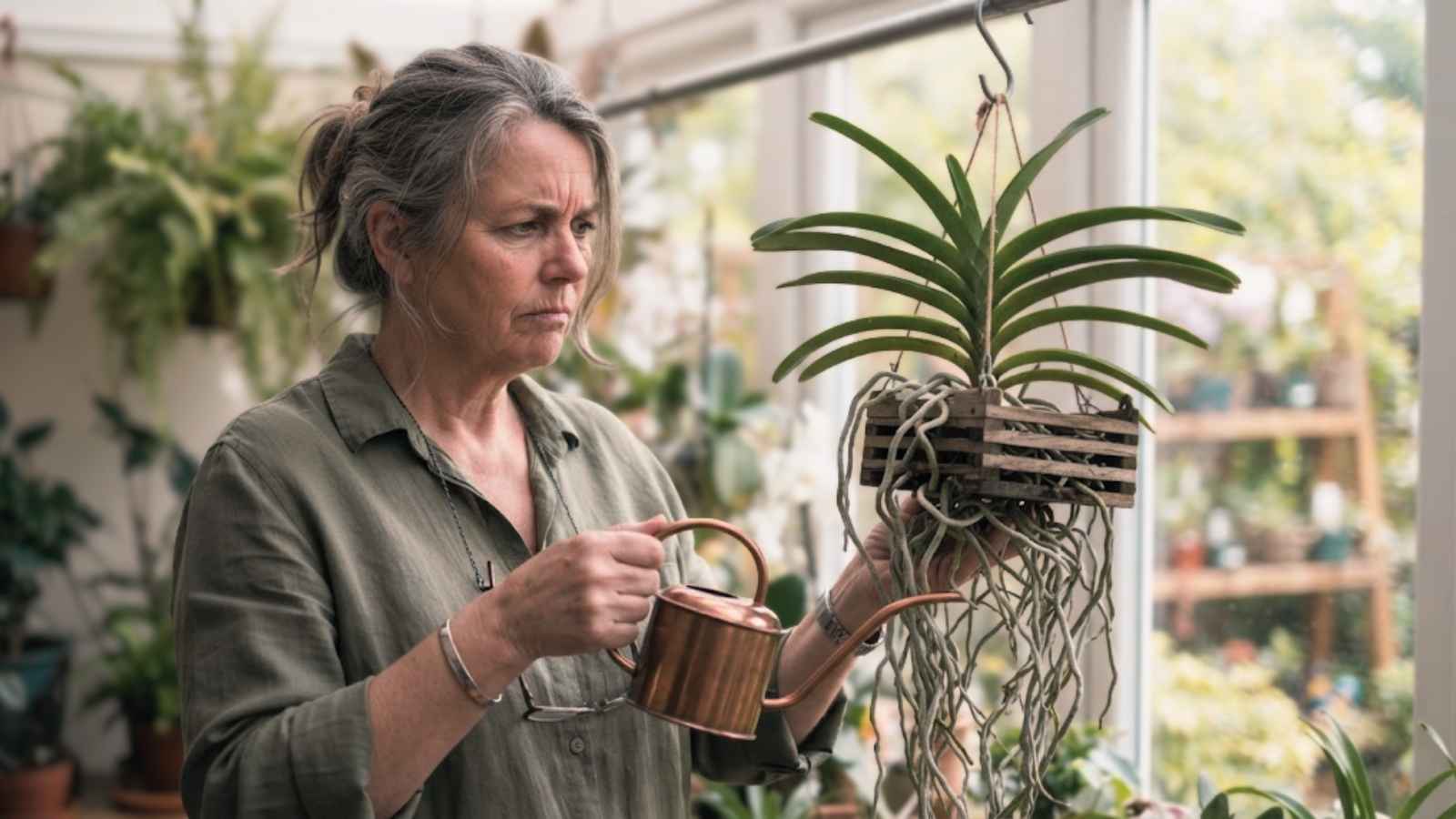
The most common mistake is watering at a fixed time without looking at the plant.
The Vanda gives a clear signal when it needs water: the color of the root.
- Grayish root, time to water.
- Green root, it is hydrated.
This is the only reliable indicator, more than any schedule.
Temperature changes the frequency:
- Above 86°F (30°C): water twice a day
- Between 54°F (12°C) and 86°F (30°C): once is enough
- Below 54°F (12°C): the plant doesn’t need water — in intense cold, water every other day
But in practice, the climate in each home changes everything.
- A grower in Florida waters the Vanda every day, and twice on days with strong sun and wind.
- Another grower in the United Kingdom tried keeping the plant hanging with its roots exposed — but the dry air in the home damaged the roots. The solution was to switch to a glass vase with a few centimeters of water at the bottom, replenished every few days.
- In Texas, even watering twice a day, one grower reports difficulty keeping the plant hydrated in the heat.
In a region with harsh winters, another grower tried keeping the Vanda without a pot for two years — and it died. They only succeeded after moving it to a pot with stones at the bottom.
Someone else’s watering routine is designed for the climate in their home, not yours. The color of the root is the only guide that automatically adapts to your environment — without needing to copy anyone.
Mistake 2 – Not enough light
Many people hear that the Vanda “likes sun” and get it wrong: they put the plant in direct sunlight, thinking they’re doing the right thing. The problem is the opposite of what it seems, it needs plenty of light, but indirect light.
Direct sun burns it. Too much shade prevents flowering.
The ideal temperature range also matters here: between 59°F (15°C) and 70°F (21°C) at night, and between 75°F (24°C) and 102°F (39°C) during the day.
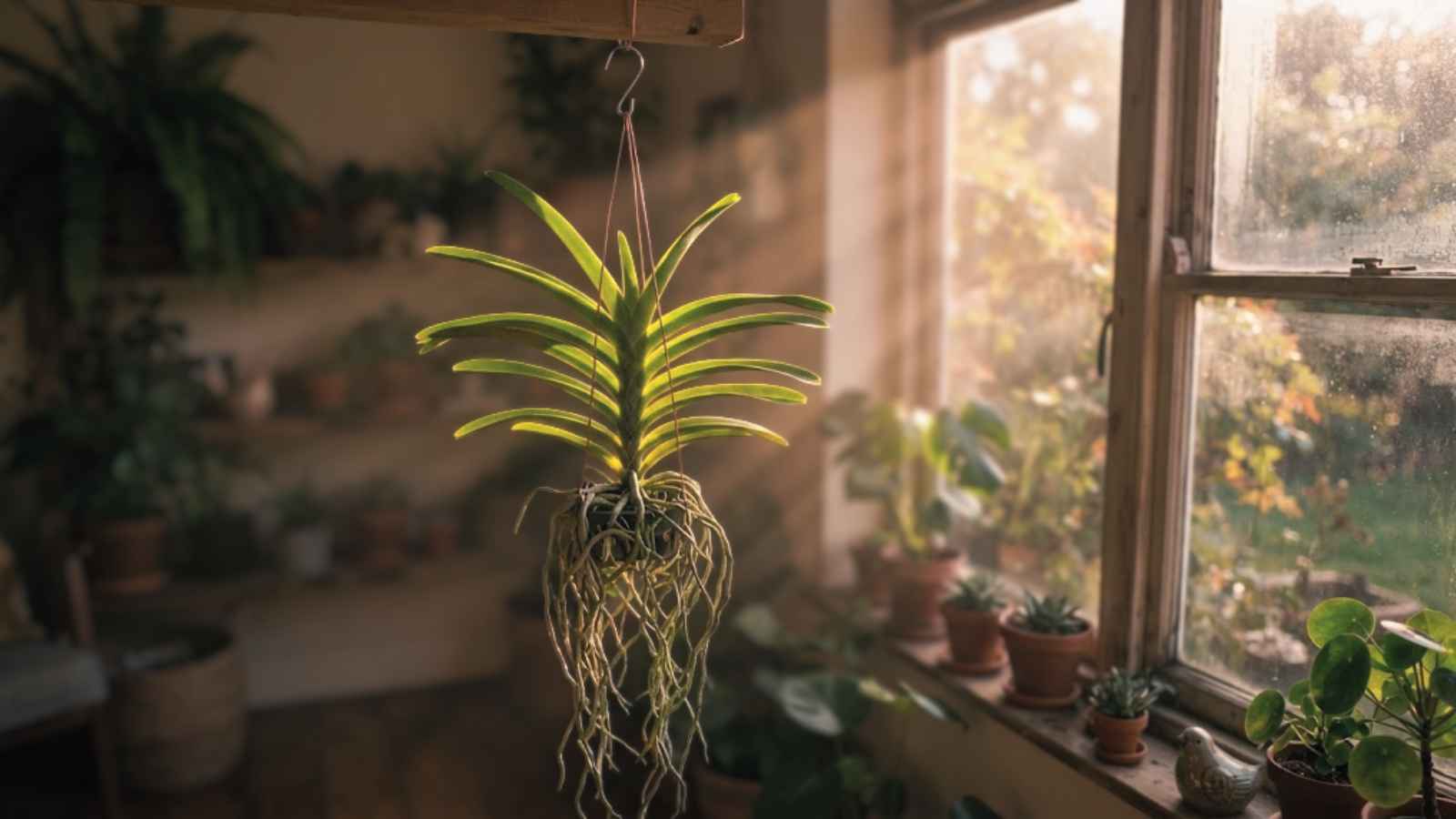
Below 59°F (15°C) for too long, the plant may go dormant for months, without growing or flowering.
There’s another detail that’s easy to overlook: it’s not enough for the room to have light.
The plant’s position on its support matters just as much as the amount of light in the room. If the Vanda is positioned in a spot that doesn’t receive enough light, flowering can be compromised even in an environment considered “well lit.”
Mistake 3 – Incorrect fertilizing
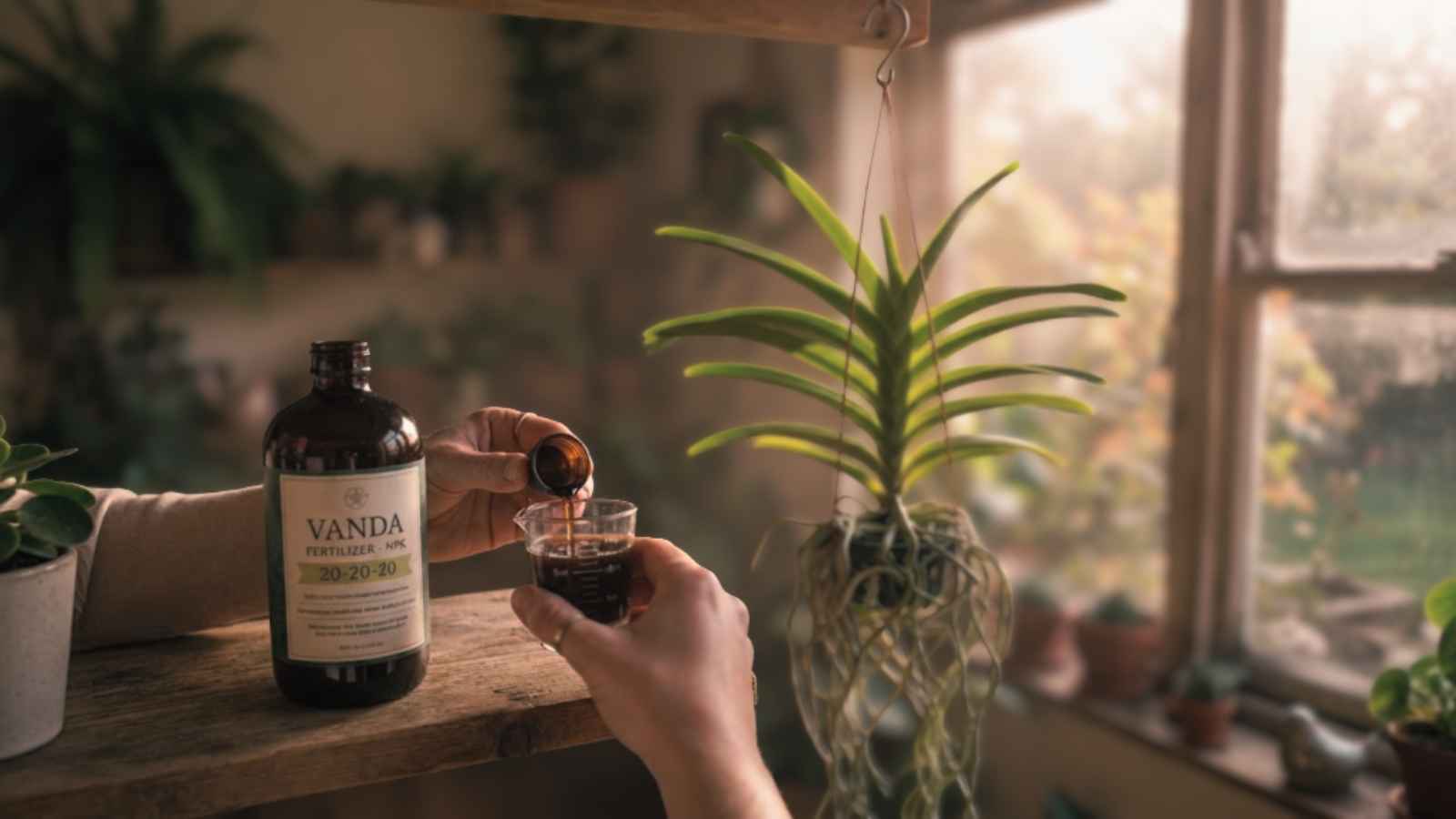
The Vanda needs much more nutrients than most orchids.
Ideally, use a fertilizer with a higher phosphorus content, such as NPK 15-30-20, applied directly to the roots.
- Above 64°F (18°C): fertilize every 7 days
- Below 64°F (18°C) (especially in winter): every 2 weeks
- Best time: early morning or late afternoon, when the sun is weaker
You can even fertilize during flowering. The problem is spraying directly onto the buds or open flowers: the spray can compromise the flowering that’s already underway, precisely when the grower least wants to damage anything.
Mistake 4 – An environment without temperature variation
This is the hardest mistake to notice.
The Vanda needs to experience a temperature difference between day and night to “understand” that it’s time to flower.
An environment that is too stable (Example: indoors, with air conditioning running all the time and a constant temperature year-round) causes the plant to enter a state of stagnation.
It survives. But it doesn’t receive the stimulus that triggers flowering.
A difference of just a few degrees may be enough to unlock this.

The Vanda’s ideal temperature range helps explain this trigger:
- Night: 59°F (15°C) a 70°F (21°C)
- Day: 75°F (24°C) a 102°F (39°C)
It’s not enough to be within this range.
It’s the variation between the two extremes that acts as a signal for the plant.
Those who grow in a 100% climate-controlled environment may unknowingly be eliminating exactly the signal the plant needs to flower — even if watering, light, and fertilizer are all correct.
Mistake 5 – Impatience and Constant Moving
This mistake appears in two opposite ways, and both prevent flowering in the same way.
The trap of impatience: giving up too soon.
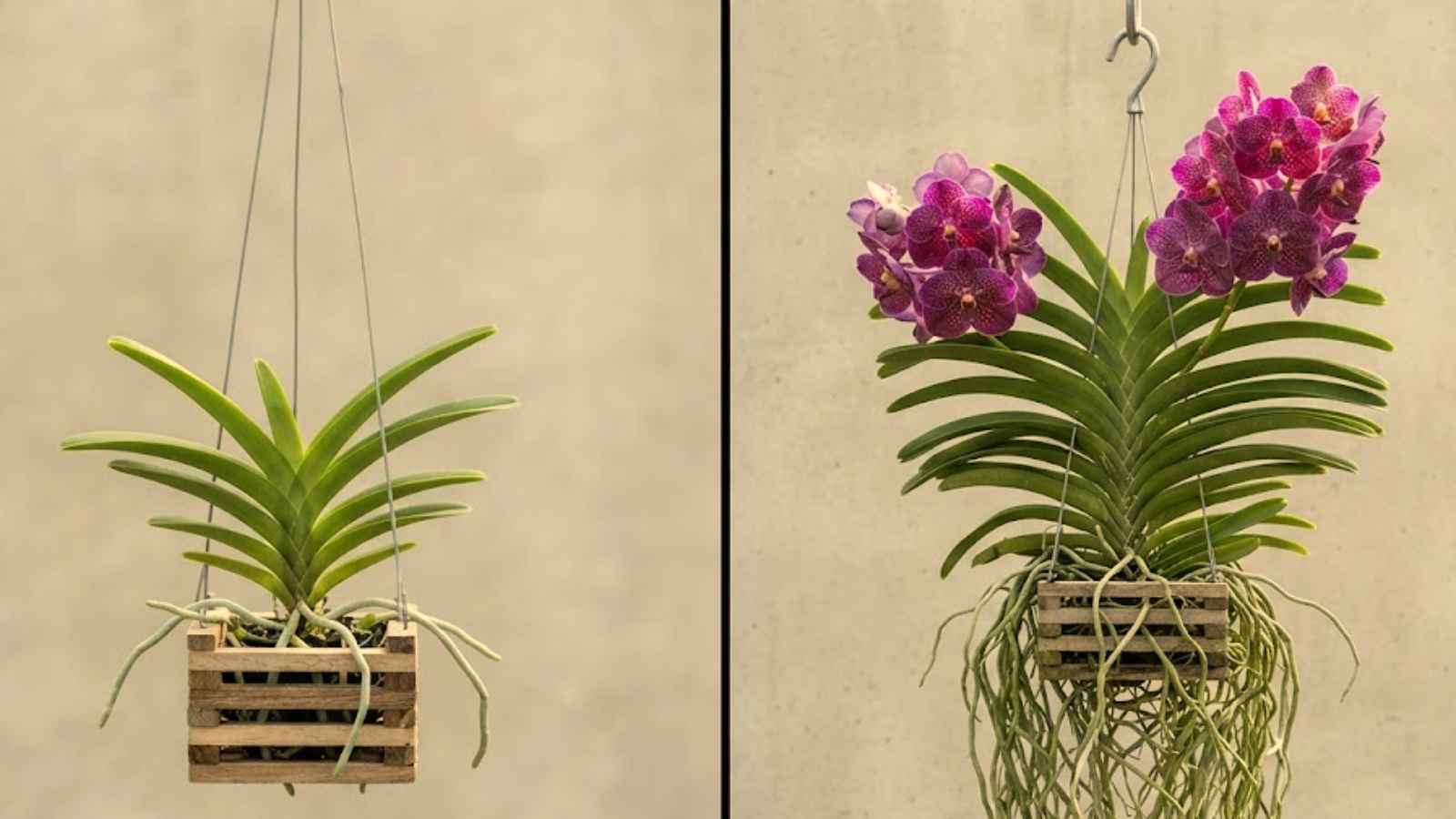
If the plant is young, it simply isn’t going to flower yet. It’s not a failure of care; it’s a lack of maturity.
A practical reference used by experienced growers: when the Vanda has well-developed foliage, with several sets of leaves, it’s a sign that flowering may be approaching.
With a plant that is still small and newly acquired, it’s a matter of time — not of getting the cultivation right or wrong.
The trap of constant moving: moving the plant around constantly in search of the “perfect spot.”
Each change of environment is a small reset.
The plant spends energy readapting to the new light, humidity, and temperature instead of investing that energy in flowering.
Frequently changing its position in an attempt to get it right faster usually delays the process instead of speeding it up.
Reports from the internet: One grower documented, in a series of posts, the progressive loss of lower leaves shortly after moving the Vanda to a new environment — from the supplier’s location to her home.
Other growers reassured her: this is usually normal, a sign of adaptation, not that the plant is dying.
Another report shows the opposite side of the mistake: one grower kept the plant bare-rooted, without a pot, for two years — and it died. They only succeeded after changing their approach, reinforcing that “giving it more time” only works if the basic growing conditions are already right.
Learn How To Keep Your Orchids Healthy And Ready to Bloom Every Year
Yes, I Want to Have Beautiful, Blooming OrchidsWhat to do from now on
None of these five mistakes requires changing everything at once.
- Watering: look at the color of the roots now. Grayish, water. Green, wait.
- Light: observe where the plant is positioned — not just the room, but the exact spot on the support. Does it get light on its leaves in the morning, or only in the room around it?
- Fertilizer: check whether the formula is rich in phosphorus, and whether any bud or flower is in the path of the next spray.
- Temperature: if the environment is always the same, day and night, look for a space with a little more variation.
- Patience: if the plant is young or has just moved to a new home, give it the time it’s asking for — without moving it again.
Each Vanda flowers at its own pace. But its rhythm only becomes apparent when mistakes stop getting in the way.