If you’ve ever tried to care for an orchid like any other plant — placing it in a pot with soil — there’s a good chance you made exactly the mistake that prevents this species from thriving.
The Vanda orchid, known for its intense and eye-catching blooms, simply wasn’t made to live in soil. And understanding this completely changes how you grow it — and the results you get.
Learn How to Achieve Super Blooms on Your Orchids
➜ YES, I WANT TO LEARNIt doesn’t grow in soil (and that changes everything)
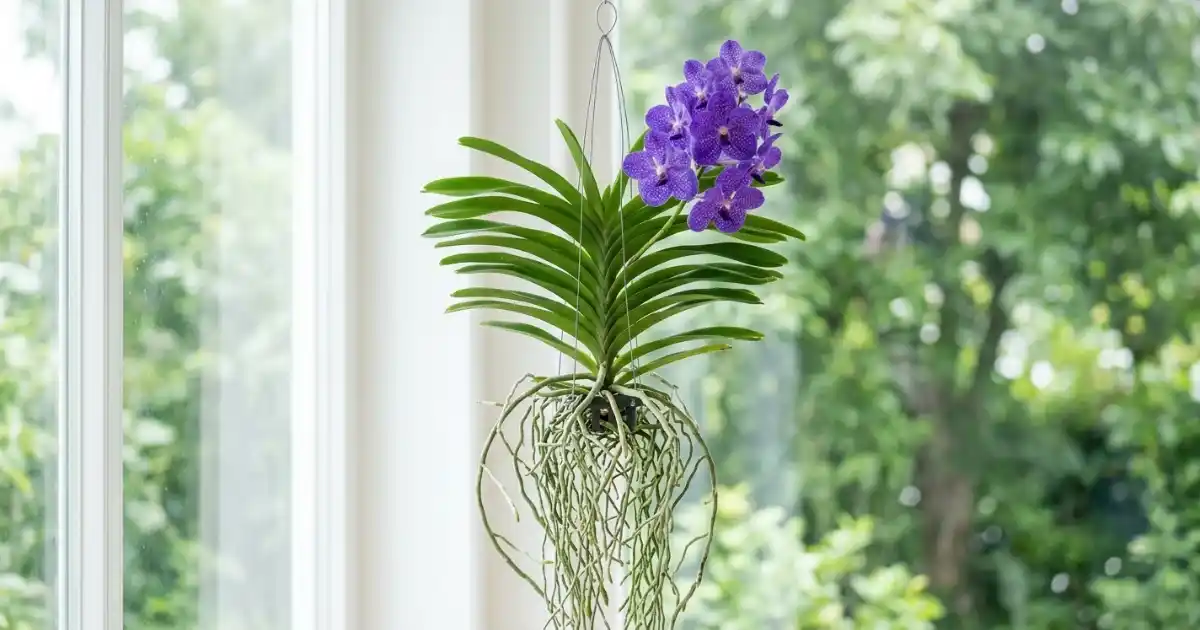
Unlike most plants you know, the Vanda is an epiphytic orchid. This means that, in nature, it grows attached to trees, with its roots fully exposed to the air.
No soil. No closed pot.
These roots aren’t there just to “hold” the plant — they are responsible for absorbing water and nutrients directly from the environment.
When you put this orchid in soil, you’re basically taking away its natural way of breathing.
The problem with using soil (even if it seems right)
Putting a Vanda in substrate may seem logical at first. After all, that’s how we care for most plants.
But here’s the problem: the substrate retains too much moisture.
And that creates the perfect scenario for what this orchid hates most — excess water around its roots.
This mistake can lead to root rot, diseases, and even the death of the plant.
In other words: what seems like care… turns into risk.
Why the roots need to stay free
Vanda roots have a very specific role: they need to dry quickly after watering and receive constant air circulation.
That’s why the ideal way to grow it involves keeping the plant:
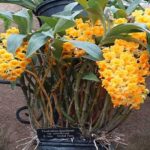
- hanging
- mounted on trunks
- or in open baskets
Always with the roots exposed.
This detail isn’t aesthetic — it’s functional.
Without ventilation, the plant loses its ability to stay healthy.
“But can you use substrate in some cases?”
You can — but as an exception, not the rule.
Using substrate only makes sense in specific situations, such as:
- when the plant is still young
- for temporary support
- or in displays
Outside of that, substrate can hinder root development.
The right way to think about this orchid
Maybe the biggest mistake here isn’t technical — it’s mental.
We look at an orchid and automatically think: pot, soil, watering.
But Vanda breaks that pattern.
It works almost like a “suspended” plant, depending far more on the air around it than on what’s beneath it.
And that’s exactly why so many people find it difficult to grow — when in reality, they’re just treating it like a common plant.
What happens when you get this right
When you respect this simple detail — keeping the roots free — everything starts to change:
- less risk of disease
- healthier roots
- better water absorption
- and, most importantly, more energy to bloom
And that makes a real difference in the results.
In the end, it’s not harder — just different
Vanda isn’t a complicated orchid. It just requires you to abandon a rule that seems obvious: planting in soil.
And when you understand this, you realize that the “secret” isn’t about doing more — but about stopping what always seemed right.

![How to Make an Orchid Bloom [Beginner's Guide]](https://planticulous.com/wp-content/uploads/2023/10/How-to-Make-an-Orchid-Bloom-featured-image-150x150.jpeg "How to Make an Orchid Bloom – featured image")