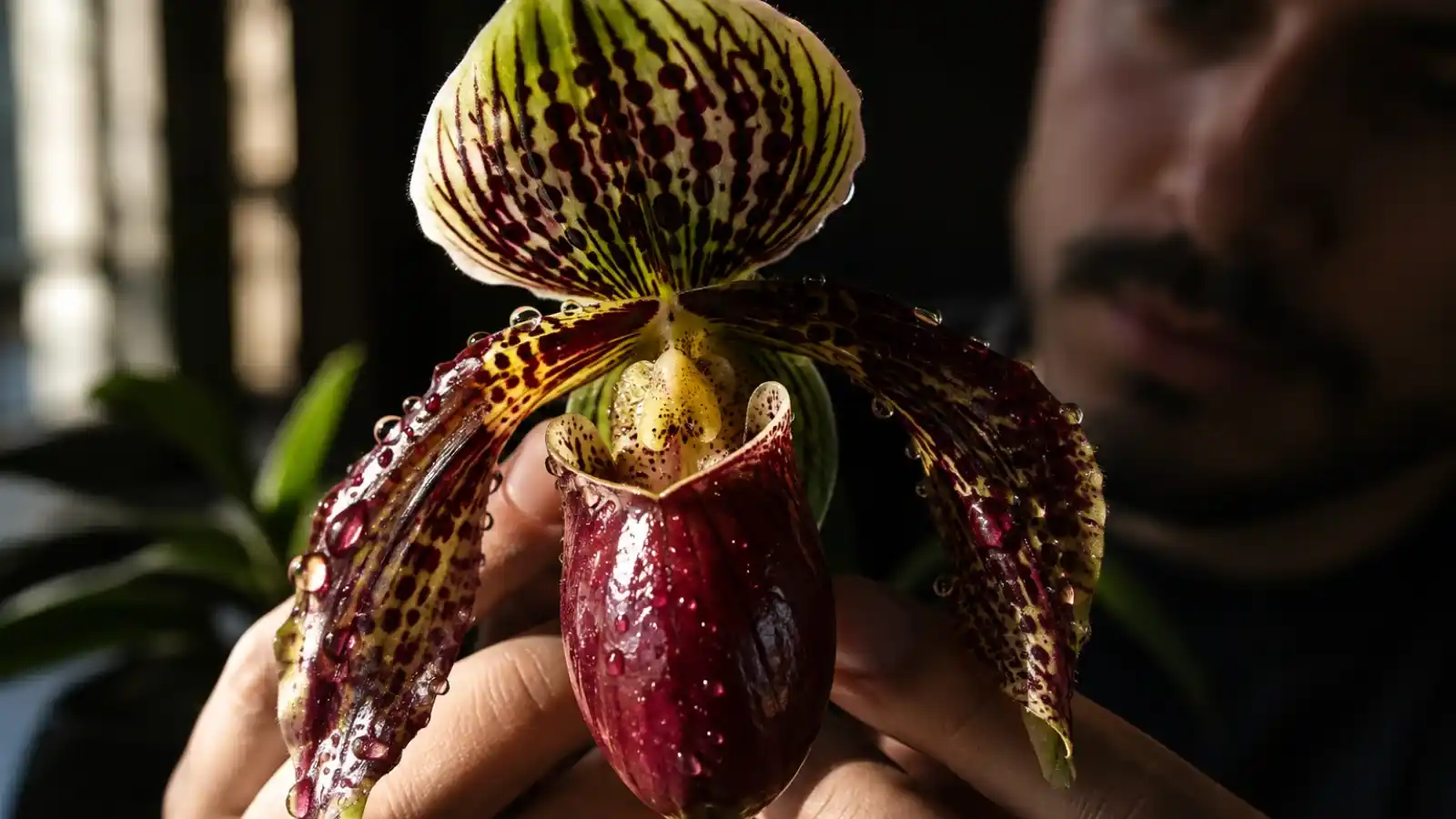
Today, you’re going to learn the curious story behind one of the most beloved orchids among growers: the Paphiopedilum, or slipper orchid.
This plant is native to Asia.
But to understand what the name Paphiopedilum means, we first need to travel some 10,000 km (roughly 6,200 miles) from any Asian forest where it grows, to a city on the island of Cyprus, in the Mediterranean.
The name breaks down into two parts.
- “Paphio” comes from Paphos, a city in Cyprus.
- “Pedilum” comes from the Ancient Greek pedilon, meaning slipper or sandal.
In other words: the slipper of Paphos.
The New York Botanical Garden explains the name exactly this way, with “Paphio-” pointing to the city and “-pedilum” coming from pedilon.
Learn How to Achieve Super Blooms on Your Orchids
➜ YES, I WANT TO LEARNBut why Paphos, of all places?
For this part, we’ll turn to the Missouri Botanical Garden.
According to this source, the root of the name is paphia, one of the epithets of Aphrodite (the Romans’ Venus), and the main center of worship for this goddess was located right in Paphos, Cyprus.
According to tradition, Aphrodite rose from the sea and came ashore right there, and it was this legend that ended up stamped on the scientific name of an Asian orchid.
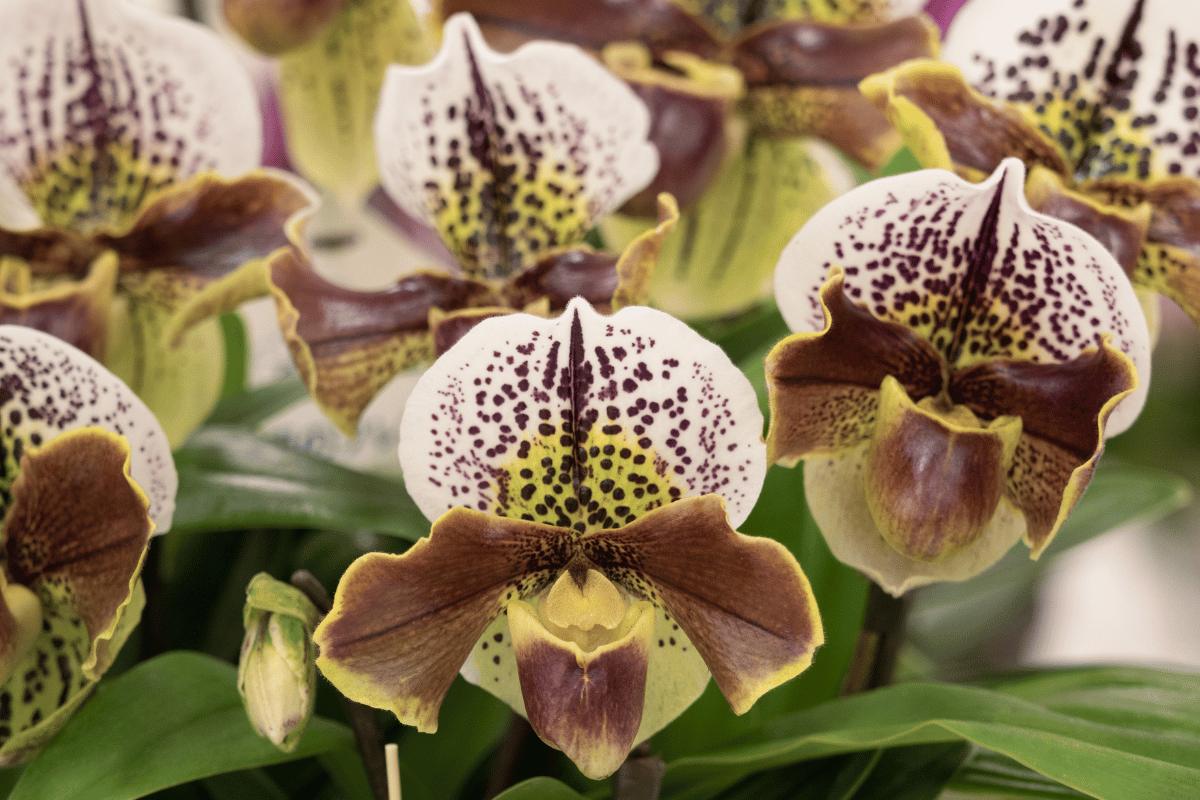

Now, let’s look at what people actually call it.
Over time, the genus has picked up a whole collection of common names, including:
- Venus slipper
- Tropical lady’s slipper
- Asian slipper orchid
- Paph, the growers’ shorthand
Not to mention the best-known one of all: slipper orchid.
It seems everyone found their own way to name this flower.
The official name and the slipper orchid mix-up
In the past, species classification wasn’t as precise as it is today, so for a long time Paphiopedilum was considered a Cypripedium (a genus also commonly known as the lady’s slipper orchid).
The person who set the record straight was German botanist Ernst Hugo Heinrich Pfitzer, in 1886.
Paphiopedilums are usually a bit pricier and harder to find, because they’re difficult to propagate and clone.
Without cloning, nearly all commercial production is done from seed.
As a result, every Paphiopedilum you buy is one of a kind, with its own variations in color and spotting. There’s no other plant exactly like yours.
Planning to grow this orchid? Be careful!
One grower pointed out that you need to be careful when applying generic orchid tips to a Paphiopedilum, and that’s true.
The overwhelming majority of content online was written with Phalaenopsis (moth orchids) in mind, and they have very different water and potting mix needs.
The slipper orchid is a terrestrial plant with specific care needs. If you want to learn what really works for growing it, read our complete guide and check out our Simplifying Orchid Care Guide ebook.