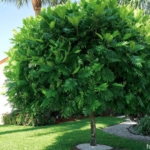
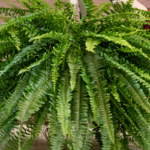
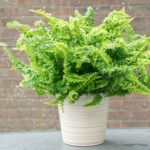
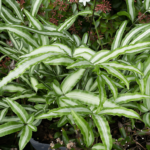
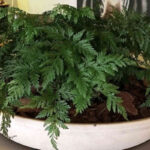
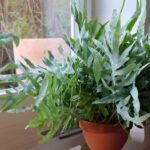
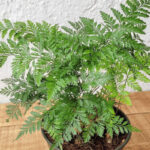
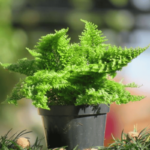
The monarch fern (Microsorum scolopendria) is a plant that has gained prominence over the years, especially in Hawaii, where it’s used in leis, to scent coconut oil, and in traditional medicine. Despite its fame, it’s not native to Hawaii.
Microsorum scolopendria is native to the tropical and subtropical regions of the Old World, from Africa and Madagascar through India, Southeast Asia, and northern Australia to the islands of the South Pacific, as far as French Polynesia.
In this article, you will learn interesting facts, characteristics, and most importantly, how to grow this fern.
How to care for the monarch fern

Considered an easy-to-grow plant, the monarch fern is an excellent choice for beginner gardeners living in tropical regions, or as a houseplant in cooler climates.
To grow it successfully, follow the care tips below:
- Providing the right environment (temperature, humidity, lighting, and ventilation)
- Choosing where to grow it
- Choosing the right substrate and watering correctly
- Fertilizing
- Repotting and pruning
- Propagating your fern (optional)
- Preventing and controlling pests and diseases
Below, we’ll discuss each of these topics in more detail.
Providing the right environment
One of the most important steps in caring for any fern is to provide a suitable environment for its growth.
For that, your growing environment needs to address the following considerations:
- Temperature
- Humidity
- Lighting
- Ventilation
The ideal temperature for this fern is between 18°C and 24°C (64°F and 75°F), but it tolerates slight variations.
During hot days, you may need to increase humidity or the frequency of watering, in addition to taking great care with lighting.
The lighting for the monarch fern should be indirect and abundant.
In other words, it should be placed in a well-lit location but protected from direct sunlight.
Regarding humidity, like other ferns, this species needs a humid environment, so avoid placing it near air conditioning or in very dry areas.
If necessary, you can use a tray with water and pebbles just below the plant’s pot (as shown in the photo below).

Lastly, ventilation. Your plant should be protected from strong winds, but should never be placed in a stuffy location.
Where to grow it
Now that you understand the basic needs of this plant, you can choose a location to grow it.
It’s usually grown in:
- Vertical gardens
- Hanging pots
- Garden beds
- Under trees
Remember to provide the right humidity, protection against strong winds, indirect lighting, and an average temperature between 18°C and 24°C (64°F and 75°F).
Choosing the right substrate and when to water
The soil for your monarch fern should be rich in organic matter and provide good drainage.
For this, you can use:
- Pine bark
- Worm castings
- Sand
- Garden soil
- A commercial fern potting mix
Use a pot with drainage holes. Mixing bark or coarse sand into the substrate helps more with drainage than a layer of gravel at the bottom of the pot.
Regarding watering, you should water it before the substrate dries out completely, as it prefers consistently moist but not waterlogged soil.
To check if the soil has dried out, you can do the finger test or use a soil moisture meter. Insert your finger or the meter into the substrate about 2 to 3 cm (1 inch) deep. If you feel that the soil is dry at this depth, it’s time to water again.
Remember that it’s better to water deeply, allowing the water to reach the roots, rather than watering lightly and often.
Just be careful not to soak the plant’s substrate.
Fertilizing

Fertilization should occur more frequently during the spring and summer months, when this plant’s growth is more active.
During this period, you can use specific fern fertilizers or balanced formulations like NPK 10-10-10, diluted to half the recommended dose, since ferns are sensitive to excess fertilizer salts.
Other options are organic fertilizers, such as:
- Crushed eggshells
- Worm castings
- Bone meal
- Used coffee grounds
Repotting, pruning, and propagation
Repotting should be done when your fern’s pot becomes too small for it, typically every 2 or 3 years.
To do this, follow the step-by-step instructions in the video below:
Regarding pruning, from time to time, you can remove old or dead leaves.
Propagation is done by dividing clumps or through spores. Below are two videos that will help you perform these procedures.
Pests and diseases
The monarch fern is quite resistant and rarely has serious problems.
Occasionally, it can be attacked by scale insects, mealybugs, or slugs, especially in stuffy or overly damp spots.
To learn how to control these issues, I recommend this guide on fern pests and diseases.
Characteristics of the monarch fern
With a size ranging from 30 to 70 cm (12 to 28 inches), the monarch fern has emerald green, leathery, deeply lobed leaves that catch the attention of growers. It spreads through creeping, scaly rhizomes that root as they grow along the ground, trees, or rocks.

Today, it can be found on all the major islands of Hawaii. This plant was introduced to the Hawaiian Islands in the late 1910s, where it adapted well to the climate and won the hearts of growers.
NOTE: Microsorum scolopendria and Phymatosorus scolopendria are botanical synonyms. Kew currently accepts Phymatosorus scolopendria, while many gardens and nurseries still use Microsorum, so you will find this fern under both names.
Many plants sold as monarch fern, especially in Hawaii and Florida, are actually the closely related Microsorum grossum (musk fern).
Sources: Plants of the World Online (Kew), National Tropical Botanical Garden, and NC State Extension.
If you want to learn more about fern cultivation, check out our articles:
- How to Care for Ferns in 9 Steps (For Beginners)
- Blue Fern (Phlebodium aureum) – How To Grow and Care
- Marisa Fern: 7-Step Growing and Care Guide
- Rabbit’s Foot Fern (Davallia fejeensis): Cultivation Guide
- Nephrolepis exaltata (Boston Fern) – How to Grow and Care
- Leatherleaf fern – Care, Characteristics and Curiosities
Did you enjoy this article? Then share it on your social networks and leave a comment below. I’ll be very happy to reply to you.