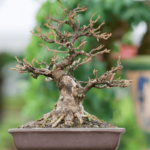
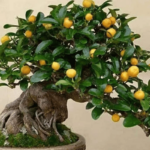
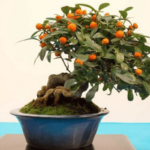
There are some pests and diseases that can attack bonsai species and, if you don’t know how to identify and control them, you could lose your plants.
I wrote this guide to help growers keep their bonsai healthy and free from these problems.
Below you will find out about the main pests and diseases that attack bonsai trees, what their symptoms are and what the most recommended control methods are.
So, continue reading this article.
Pests in bonsai
First let’s start with the pests, as they are the most common problems in bonsai.
In general, we consider as pests those animals that damage our plants in some way.
Most of the time, the symptoms are visible and control is fairly easy.
Below are the main pests that can affect your bonsai, what to watch out for and how to fight them.
Aphids
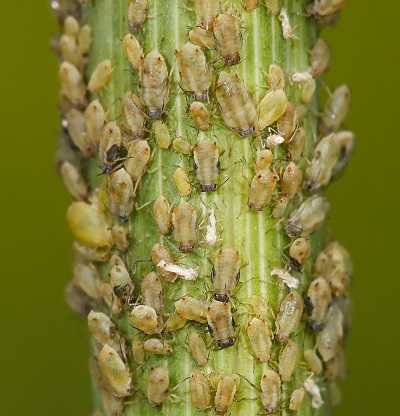
Also known as plant lice.
Aphids usually stay in groups and mainly attack the following parts of bonsai trees:
- Leaves
- Flowers
- Stems
When they infest your plant, they suck the sap and inject saliva that can damage the leaves and new shoots.
Usually an aphid infestation is accompanied by several ants walking around your plant.
This is because aphids release a sweet liquid called honeydew, which attracts ants.
Among the symptoms are:
- Ants on the plant
- Leaves turning yellow and wrinkled
- Leaf fall
In addition, another symptom is sooty mold.
Basically, the sweet honeydew lets a black fungus called sooty mold grow on the leaves.
This black layer blocks light and weakens the plant.
To combat this type of pest, cotton swabs with rubbing alcohol can be used if the infestation is still in the early stages.
And if the infestation is already advanced, use an insecticide.
Among the recommended options are:
- Insecticidal soap
- Neem oil
- A pyrethrin-based insecticide
Mealybugs
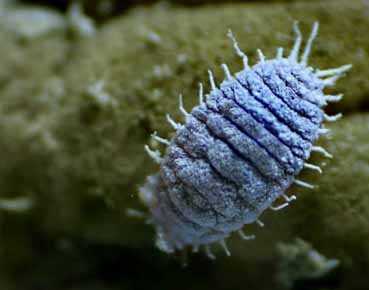
Mealybugs are very similar to aphids.
You may even notice that they cause almost the same symptoms as aphids.
They are insects that can reach up to 5 mm (0.2 inch) in length.
They live in warmer and drier environments.
Some species of mealybugs can be easily identified because they are covered in a substance that is very similar to cotton.
The big problem with these pests is that they, like aphids, suck the sap from the plant.
In addition, they weaken the plant and hinder the development of bonsai trees.
Some symptoms are:
- Ants walking on the plant
- Sooty mold
- Leaves with yellow spots
- Small “cotton balls” on your plants
For a light infestation, touch each mealybug with a cotton swab dipped in 70% isopropyl (rubbing) alcohol and repeat once or twice at weekly intervals.
For bigger infestations, the insecticides are the same as those used on aphids.
You can also apply a horticultural oil, which helps smother the mealybugs.
But if you want to use a slightly more natural recipe, see below some alternatives:
- Insecticidal soap
- Garlic spray
- Neem oil
Usually these natural recipes work better when the infestation is still in the early stages.
Mites
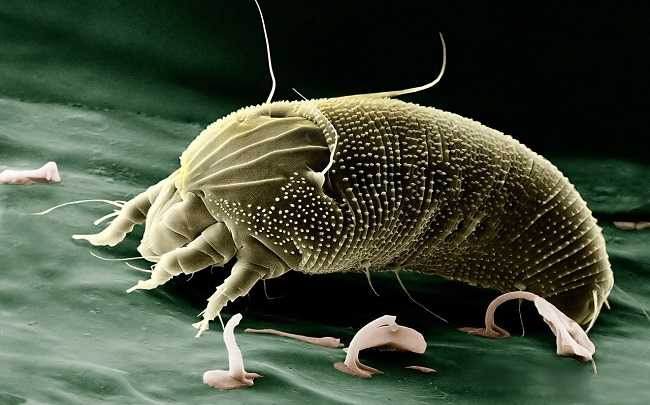
They are tiny arachnids, related to spiders, measuring between 0.25 and 0.75 mm (0.01 and 0.03 inch).
Usually they look like ticks and feed mainly on the leaves and stems.
Unlike the previous pests, these are rarely visible to the naked eye.
Spider mites thrive in:
- Hot, dry and dusty conditions
- Plants that are short of water
So make sure your bonsai is watered correctly and is not kept in a hot, dry and dusty place.
Among the main symptoms are:
- Little webs
- Defective flowers
- Yellow or reddish spots on the leaves
Usually you will find the mites on the underside of the leaves, and there is a very simple way to see them:
Hold a white piece of paper or a white plate under a branch, in bright light, and tap the branch. If there are mites, you will see tiny specks running across the paper.
To combat them, rinse the leaves, especially the undersides, with a strong spray of water.
If you notice that the infestation is still in the early stages, you can also use a cotton swab with rubbing alcohol.
In cases where it has already developed, try to use insecticidal soap or acaricides (miticides).
And to prevent them, clean your plants at least once a month, rinse the leaves regularly and remove the leaves that are already getting old.
Borers
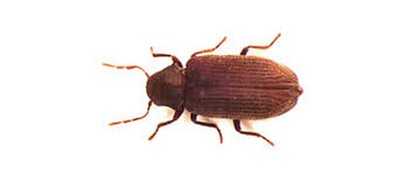
Borers are small insects that attack your bonsai.
They normally bore into the trunk and branches and lay their eggs in them.
And when these larvae hatch, they make small tunnels in the stem of your plant.
Most borers attack trees that are already stressed, so keeping your bonsai healthy is the best prevention.
To end this pest you have a few options:
- If it is only on a branch of your plant: cut off that branch and destroy it far from your plants.
- The attack is already more advanced: cut off all the infested parts and improve the care of your bonsai (watering, fertilizing and light). Once the larvae are inside the wood, sprays rarely reach them.
Slugs and snails
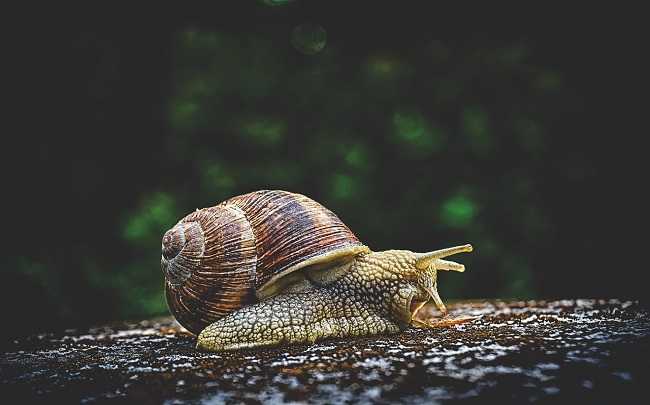
Now let’s talk about two common pests of outdoor bonsai, slugs and snails.
Both like to hide during the day, staying especially in more humid places.
And during the night they eat the leaves of your bonsai.
To combat them, you can remove them manually.
To do this, look for them during the day in their possible hiding places.
Or you can use a slug and snail bait.
The only thing you will do is leave the bait near your bonsai.
Ants
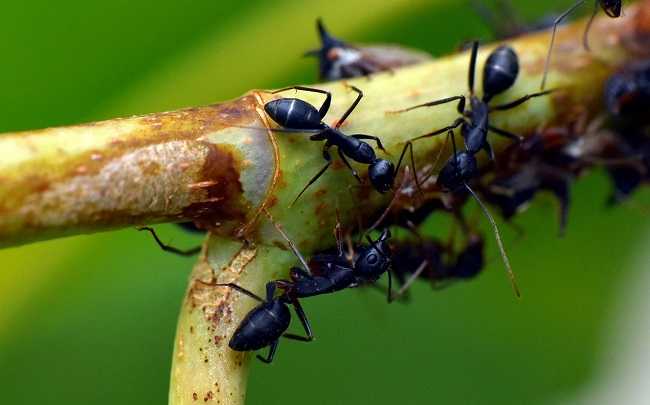
I believe I don’t need to explain what ants are.
In most cases, ants on your bonsai are a sign of other pests, such as aphids or mealybugs, because they feed on the honeydew these insects release.
So first check your plant for these pests and control them.
In some regions, leaf-cutter ants can also cut the leaves of your bonsai.
To keep ants away, some growers plant mint nearby, but its effect as a repellent is limited.
If the attack is already more advanced, it is recommended to use an ant bait, such as granular baits for leaf-cutter ants.
What you are going to do in this case is to leave these baits near the anthills.
Caterpillars
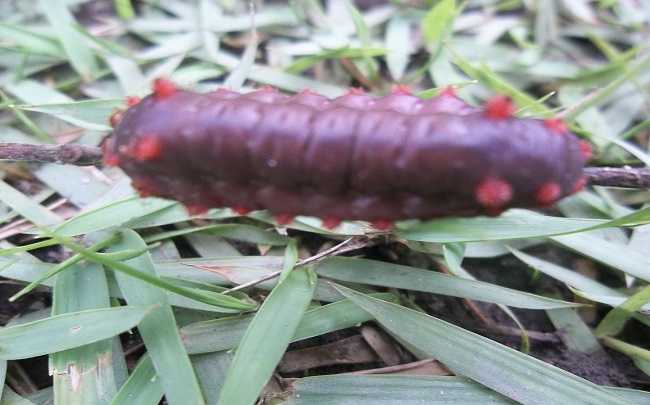
Caterpillars are the “younger version” of butterflies and moths.
Usually their damage is very similar to that of ants, as they also feed on the leaves of your bonsai trees.
Some of these animals hide in the soil during the day and attack the plants at night.
Two signs that will help you tell caterpillar attacks apart from ant attacks are:
- You can find their nests in rolled leaves or on the back of leaves.
- They leave their droppings on the leaves.
Now that you know how to identify this pest, let’s take a look at how to combat it.
First, inspect your bonsai often and remove the caterpillars by hand.
Some growers also keep plants like mint, rosemary and leek nearby, but there is little evidence that they keep butterflies and moths away.
Now if the infestation is already bigger, you must use an insecticide.
A good option is a Bacillus thuringiensis (Bt) insecticide, which acts on caterpillars.
Thrips
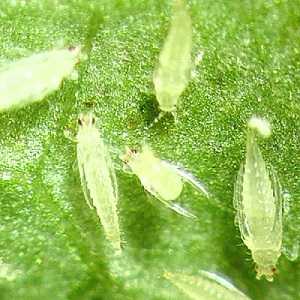
Thrips are very small pests that attack your bonsai.
Usually you will notice a few flying insects when you shake your plant.
To identify this pest, just notice if the young leaves of your bonsai are curling.
If they are, open these leaves and check if you can see small insects inside.
Usually you will suffer more from these insects if you have a ficus bonsai, such as the weeping fig.
The best way to fight them is to cut off the curled leaves and use an insecticide.
Among the options are:
- Insecticidal soap
- Neem oil
- An insecticide labeled for thrips
And don’t forget to eliminate the infested leaves, because the thrips lay their eggs inside them.
Whitefly
This is a rarer pest to appear on your bonsai.
The whitefly usually appears during the driest and hottest months.
Its main sign is tiny white winged insects on the undersides of the leaves, which fly up when you shake the plant.
They usually appear on young foliage.
To combat them, you can use:
- Yellow sticky traps
- Insecticidal soap
- Horticultural oil
Bonsai diseases
Now that we’ve seen what the main pests that affect bonsai are, let’s look at some diseases.
Keep in mind that diseases are usually more complicated than pests.
So do your best to keep your bonsai from getting these diseases so that you don’t have any problems.
Viruses
Viruses are very difficult diseases to treat.
Usually they are spread by sap-sucking insects, such as aphids and thrips.
Therefore, the best way to prevent this disease is to keep pests away from your plant.
If your plant has a virus, you will notice that the branches and leaves have changed colors.
Usually the leaves form something like a mosaic.
Pay attention: there is no cure, and no spray kills a plant virus.
What you can do is:
- Remove and destroy the affected plant, so the virus doesn’t spread to your other plants
- Control the insects that spread the virus
- Disinfect your pruning tools after using them
Fungi
Fungi appear when you are not growing your bonsai in the right way.
That is, when they stay in places with any of these characteristics:
- Very humid
- Temperature too high
- Poor ventilation
You will realize that your bonsai has fungus when some of the symptoms below appear:
- Round, yellowish spots with a necrotic appearance.
- Rotting roots
- Rust (usually the leaves will have a rust-colored powder)
- Bonsai yellowing and wilting
To combat this type of problem you must do 2 things.
The first is to provide a suitable place for your bonsai.
Because even if you fight the disease, it will come back if you don’t provide adequate conditions for your plant.
And the second thing is to fight fungi with a natural or chemical fungicide.
Bacteria
Bacteria cause some of the diseases with the most complicated treatment.
To identify them, you will notice some rotten parts in your bonsai.
But be careful, this could also be a fungus.
To combat them, remove the affected parts and improve the growing conditions of your bonsai.
You can also apply a copper-based fungicide, such as Bordeaux mixture, following the label.
Keep in mind that copper protects the healthy parts, but it does not cure the parts that are already rotten.
And avoid spraying copper in very hot weather, as it can burn the leaves.
Other bonsai problems
In addition to pests and diseases, there are also common bonsai problems, such as yellowing, drying or falling leaves, that can affect your plant.
And all these problems are caused by wrong cultivation.
Below is a quick overview of the main causes. For the symptoms and solutions in detail, I recommend that you read the article on bonsai problems.
Lack or excess of water

Leaves that turn yellow and fall may be related to both lack and excess of water.
Lack of water leaves the soil dry and the leaves withered, while excess water keeps the soil wet and can rot the roots.
Lack or excess of nutrients
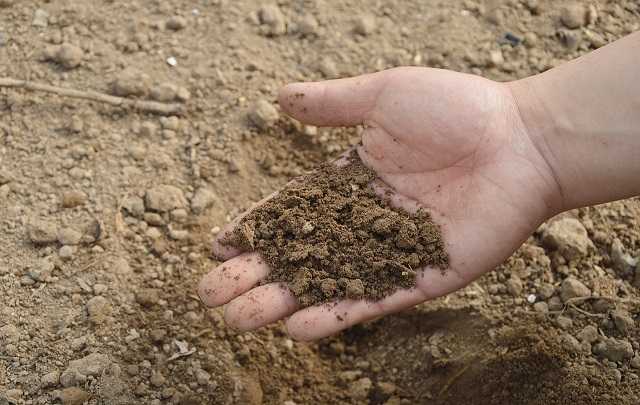
These problems mainly occur when you are not fertilizing your bonsai correctly.
Therefore, choose the best fertilizer for your species and, above all, fertilize with the correct amount.
Problems with the roots
Too many roots in a small pot make the soil dry out very quickly, while rotten roots make the leaves wither even when the soil is wet.
In both cases, repotting with a well-draining bonsai soil mix usually solves the problem.
Lighting and humidity

Very strong sun can burn the leaves, while low light produces long, pale shoots.
And very high humidity helps the roots rot, so be very careful.
Learn more about bonsai:
- Bamboo Bonsai – How to Care, Curiosities and Species
- Lemon Bonsai – Discover How to Easily Cultivate Them
- Boxwood Bonsai (Buxus) – Step-by-Step Care Guide
- Orange Bonsai: How to Care Step by Step (With Photos)
- Mulberry Bonsai – How to Care in 7 Steps (With Photos)
- Pomegranate Bonsai – How to Care in 6 Simple Steps
- Jabuticaba Bonsai – Care to Have Fruits
Conclusion: pests and diseases in bonsai
These were the main threats that your bonsai can suffer.
But remember, the best way to combat these pests and diseases is to avoid them.
Make sure your bonsai is well cared for and that it has the ideal conditions to grow.
And if you liked this article, help us reach more people, because that way you motivate us to produce more quality content like this one.
Click on the icons below and share this content.